
Skip to content

How to build in Cap Cana: steps, permits and timeline

Cap Cana is a private development with its own rules: before you build or renovate a villa, you need approval from its Development Council and permits from the Dominican government. This guide walks you through the whole process, with official sources, so you know what to expect.

Stages
Design · Approvals · Construction · Handover
In Cap Cana since
2010
Last reviewed
November 2026

We wrote it from experience: we have worked in Cap Cana since 2010, and our office is at Fishing Lodge, inside Cap Cana.

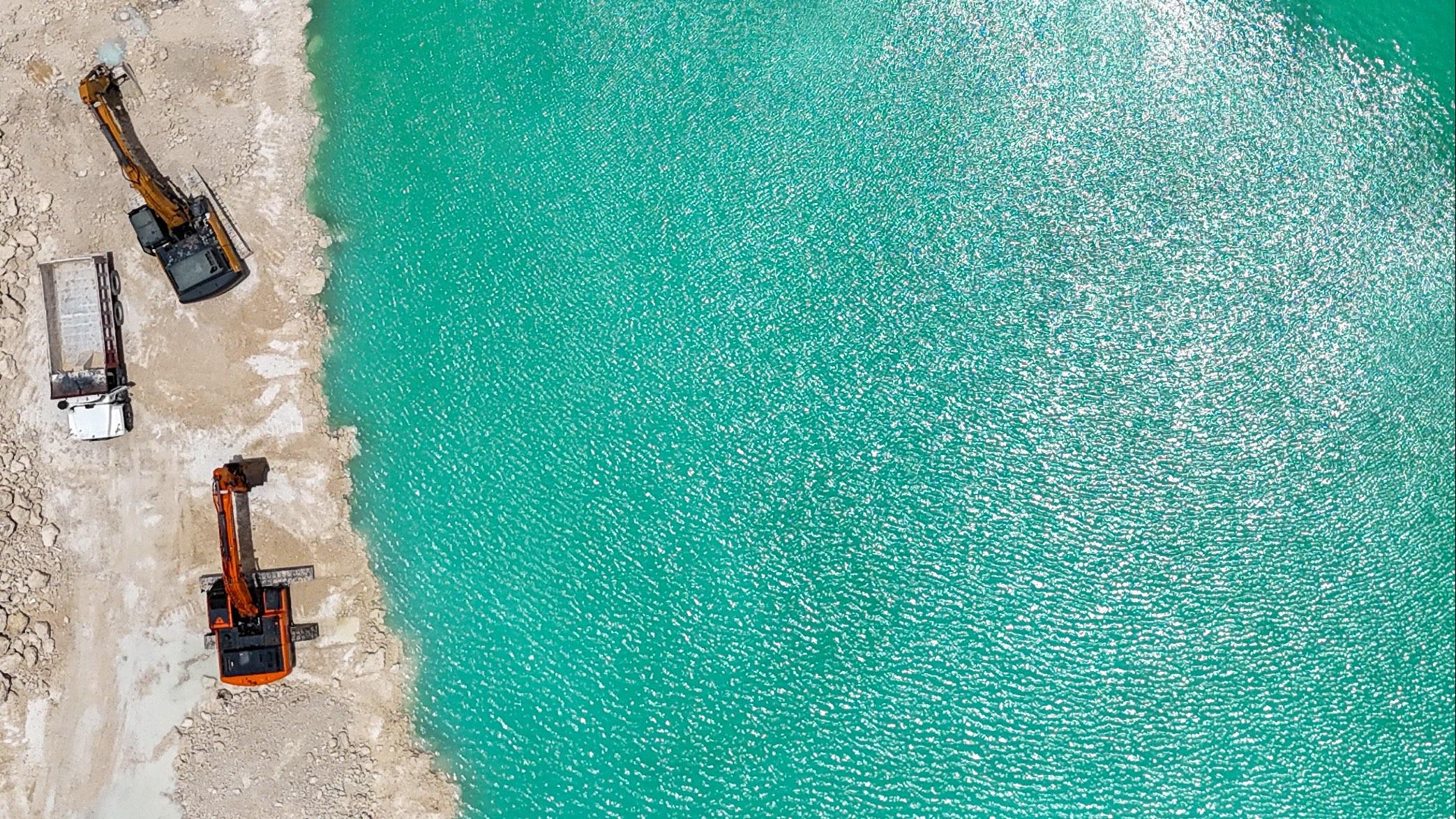
Top-down view of the Cap Cana Marina expansion: excavators and a dump truck beside turquoise water
Cap Cana Marina expansion. Excavation.

Context

Why building in Cap Cana has its own rules

Cap Cana is a private, gated oceanfront development with 24-hour security, a marina, golf courses such as Punta Espada and Las Iguanas, and beaches such as Juanillo.

Each community has its own design guidelines —levels, heights, lot coverage, setbacks and materials— and every project, new build or renovation, needs approval from Cap Cana’s Planning and Development Council (CPD) before work begins.

Listed in Forbes Global Properties Dominican Republic Edition

The Dominican Republic edition of Forbes Global Properties presents Cap Cana as one of the country’s three major luxury destinations. Construvesa is one of the businesses supporting that edition.

View the magazine (opens in a new tab)

Process

The process in four stages

Design, approvals, construction and handover. These are the rules and paperwork for each stage.

Design: your lot and your community’s rules

Don’t have a lot yet? We have our own lots with CONFOTUR status and, if we do not have the one you are looking for, we will find it for you.

Find a lot in Cap CanaCustom Luxury

  • Request your lot’s cadastral plan from Cap Cana’s Development Department and check with APROCAP that the lot is up to date on its payments.
  • Check your community’s design guidelines. For example, the published guidelines for Residencias del Parque allow one villa per lot, up to two levels, lot coverage between 20% and 45%, and setbacks of 5 m in front, 8 m behind the building and 3.5 m on the sides.
  • Choose your architect and your builder. With that information, the concept design is prepared: layout, elevations and 3D images.
Lot setback diagramRectangular lot with the building set back 5 m from the front, 8 m from the back and 3.5 m from each side, per the published guidelines for Residencias del Parque.8 m · rear5 m · front3.5 m3.5 m1 villa per lotBack of the lotFront of the lot

Example: published guidelines for Residencias del Parque

Villas per lot
1
Levels, maximum
2
Lot coverage
20%–45%
Setbacks: front · rear · sides
5 m · 8 m · 3.5 m

Illustrative diagram, not to scale.

Architectural designCustom Luxury

Approvals: Cap Cana’s CPD and government permits

Development Council (CPD), in three stages

The project is submitted online in three stages: conceptual, preliminary and executive. Each stage must be approved before moving on to the next, and either the owner or their architect can submit it.

The conceptual stage includes, among other things, the site plan, floor plans, elevations, sections and 3D views. The executive project includes the sanitary, fill, electrical, structural, mechanical and landscaping plans, the project description and the government permits.

A submission fee, based on the project type and area, is paid before the executive stage, and maintenance fees (APROCAP and condominium) must be up to date.

Important: work cannot start while a review is pending. If it starts without authorization, it is stopped.

Dominican government permits

  • Municipality or municipal district: land use, project no-objection and stamped drawings. We confirm which office issues them in each case.
  • Ministry of Environment: environmental authorization.
  • Ministry of Tourism (MITUR): Cap Cana requires it in a villa’s executive project.
  • Ministry of Housing, Habitat and Buildings (MIVHED): building permit. It requires, among other things, the title, the survey plan, drawings stamped by the municipality, structural calculations and a geotechnical study.

Architectural designCustom Luxury

Construction: job-site rules inside Cap Cana

  • Work starts only with the Council’s formal approval letter.
  • The builder registers with Cap Cana’s Access Control with a letter (name, tax ID, phone, authorized email and work area) and ID cards for its crew.
  • Working hours: Monday to Friday from 8:00 a.m. to 6:00 p.m. and Saturdays until 12:00 p.m.; no work on Sundays. Work outside these hours must be requested in writing in advance.
  • Concrete pours: pump trucks can enter only until 4:00 p.m. on weekdays, and there are no pours on Saturdays.
  • Lot fill: a fill elevation plan with the volume in cubic meters is sent to the Development Department. When outside companies haul the caliche, Cap Cana charges a transit fee of US$7 per m³.
  • Signs: villas may only display signs with the architect’s or builder’s details.

Villa constructionCustom Luxury

Handover

During finishing, flooring, carpentry and final finishes are installed and the outdoor areas are completed. Before handover, we review every detail with you.

We are with you in every phase, from planning to final delivery, with personalized attention and constant communication.

Villa constructionCustom Luxury

Timelines

How long does the paperwork take?

Reference timelines published by Cap Cana and MIVHED. Every project is different: at our first meeting we go over the timeline for your case.

StepReference timeSource
CPD review, per stageUp to 10 days (owners’ article) or 15, 15 and 20 business days for the conceptual, preliminary and executive stages (developers’ article)Cap Cana Owners
Full CPD process4 to 6 months with organized documentsCap Cana Owners
Builder registration in Cap Cana5 to 15 business days (two Cap Cana articles give different figures)Cap Cana Owners
MIVHED building permit (official time)Up to 60 business days for non-complex projects and 120 for complex onesMIVHED
MIVHED permit (actual average)About 166 days in the second quarter of 2026Data attributed to MIVHED (Revista Mercado)

Construction time depends on size, design and finishes; we include it in your project schedule.

Fees

What do the permits cost?

Known permit fees. They do not include construction costs or design fees.

ItemAmountSource
MIVHED permit applicationRD$6,000 (credited when the permit is issued)MIVHED
MIVHED service fee0.1% of the project value, if above RD$6,000,000MIVHED
Municipal fees2.5% of the construction valueMIVHED
CODIA fees2% of the construction valueMIVHED
CPD submission feeVaries with project type and areaCap Cana Owners
Builder registration in Cap CanaUS$590 + ITBIS (VAT)Cap Cana Owners
Caliche transit fee (fill hauled by outside companies)US$7 per m³Cap Cana Owners

We don’t quote a price per square meter without seeing the project: we prepare an itemized budget with quantities, units and unit prices.

Communities

Cap Cana communities where we work

Some of the communities where we have designed, built or renovated. Each one has its own rules.

  • Las Palmas

    What it isVillas and lots next to the Punta Espada golf course.

    What we didVilla Las Palmas 13 (finishing stage) and Las Palmas 14 (design). Earlier, Las Palmas 108 (2017).

  • Las Lagunas

    What it isA villa community.

    What we didLas Lagunas 30 (finishing stage) and 31 (design); reconstruction of Las Lagunas 51 (2018).

  • Residencias del Parque

    What it isVillas, one per lot, with their own design guidelines.

    What we didThree villas in progress (23, 24 and 38) and the community’s electrical infrastructure.

  • Caletón Residences

    What it isVillas, bungalows and condos in the Caletón area.

    What we didVillas 48, 50 and 129 in design, electrical infrastructure for Phase 4 and the design of a residence (2025).

  • Paseo del Farallón

    What it isA villa community.

    What we didVillas 23 and 24 in design, plus electrical and sewer networks.

  • Punta Majagua

    What it isA residential area of Cap Cana.

    What we didVilla Punta Majagua 144, in design.

  • Green Village

    What it isA community of bungalows and villas.

    What we didTwelve additions and renovations (2021-2025), bungalow designs and the Green Village Plaza expansion (2024).

  • Soto Grande

    What it isA beachfront apartment complex.

    What we didRoof renovation on eight buildings and Playa Caracol, the artificial beach next to the complex.

  • Punta Palmera

    What it isCondominiums between Punta Espada and the beach.

    What we didMaintenance and renovation of several units (2018-2024).

Owners abroad

Building from abroad

Many Cap Cana owners live abroad. The key is a local team that prepares the submittals and permit files, manages the work and keeps you informed.

We work with an itemized budget and progress statements (cubicaciones): each period we measure the work done against the budget, so you know what was built and what you are paying for.

For signatures, powers of attorney and tax incentives, such as those under Tourism Incentive Law 158-01, check with your lawyer.

FAQ

Frequently asked questions

Do I need Cap Cana’s approval before building or renovating my villa?

Yes. According to the Cap Cana Owners help center, owners need approval from Cap Cana’s Planning and Development Council (CPD) before building or renovating. Projects are submitted in three stages (conceptual, preliminary and executive), and work must not start while a review is pending.

How long does Cap Cana’s approval take?

Cap Cana publishes review times of up to 10 days per submission (owners’ article) or 15 to 20 business days depending on the stage (developers’ article), and estimates 4 to 6 months for the whole process when documents are complete. Government permits come on top of that. At our first meeting we go over the timeline for your case.

Which Dominican permits does a villa in Cap Cana need?

For single-family homes, Cap Cana asks for permits from the municipality, the Ministry of Environment, the Ministry of Tourism and the Ministry of Housing, Habitat and Buildings (MIVHED) as part of the executive project. Requirements can change, so we confirm them for each project.

How long does the MIVHED building permit take?

MIVHED’s official service sheet sets up to 60 business days for non-complex projects and up to 120 for complex ones. According to ministry data reported in the press, the actual average was about 166 days in the second quarter of 2026. Filing a complete application from day one helps avoid delays.

Does each Cap Cana community have its own design rules?

Yes. For example, the published guidelines for Residencias del Parque allow one villa per lot, up to two levels and lot coverage between 20% and 45%, with set setbacks. Other areas have different rules, and they should always be confirmed with Cap Cana’s Development Department before design.

How much does it cost to build a villa in Cap Cana?

It depends on size, design, finishes and your community’s rules. We don’t quote a price per square meter without seeing the project; we prepare an itemized budget with quantities, units and unit prices. Permit fees are separate, such as the municipal (2.5%) and CODIA (2%) fees on construction value listed by MIVHED.

Can I build in Cap Cana if I live abroad?

Yes, many owners do. The key is a local team that handles the paperwork and keeps you informed. We work with an itemized budget and progress statements for each period, and we stay in constant contact with you throughout construction.

What are the working hours on construction sites inside Cap Cana?

Monday to Friday from 8:00 a.m. to 6:00 p.m. and Saturdays until 12:00 p.m.; no construction work on Sundays. Concrete pump trucks can enter only until 4:00 p.m. on weekdays, and there are no pours on Saturdays. Work outside these hours must be requested in writing in advance.

How is lot fill handled in Cap Cana?

You send Cap Cana’s Development Department a fill elevation plan showing the volume in cubic meters. When outside companies haul the caliche fill, Cap Cana charges a transit fee of US$7 per cubic meter. We can prepare the plan and do the fill with our own equipment.

Where in Cap Cana has Construvesa worked?

In communities such as Las Palmas, Las Lagunas, Residencias del Parque, Caletón Residences, Paseo del Farallón, Punta Majagua and Green Village, plus infrastructure and underwater works for lakes and marinas. See our projects for examples.

NoticeGeneral guidance, updated November 2026. Rules and fees change: confirm your case with Cap Cana’s Development Department and with each institution.

Sources

Let’s talk

Do you own a lot in Cap Cana?

Tell us about your project: building, expanding or renovating. And if you do not have a lot yet, we have our own lots with CONFOTUR status and will guide you to the area that fits your budget.

Find a lot in Cap Cana